eye care support

Age-Related Maculopathy (Macular Degeneration)

Age-related maculopathy (ARM), also known as macular degeneration, is a condition that affects the macula- the small, central part of the retina responsible for sharp, detailed vision.
When the macula becomes damaged, central vision is affected, while side (peripheral) vision remains intact.

Because ARM affects the area responsible for the fine detail, when it comes to vision, people may notice difficulty reading, trouble recognising faces, reduced clarity when driving and/ or distortion or missing areas in central vision.

ARM does not cause total blindness. Most people retain enough side vision to remain independent.

v-masonry-2

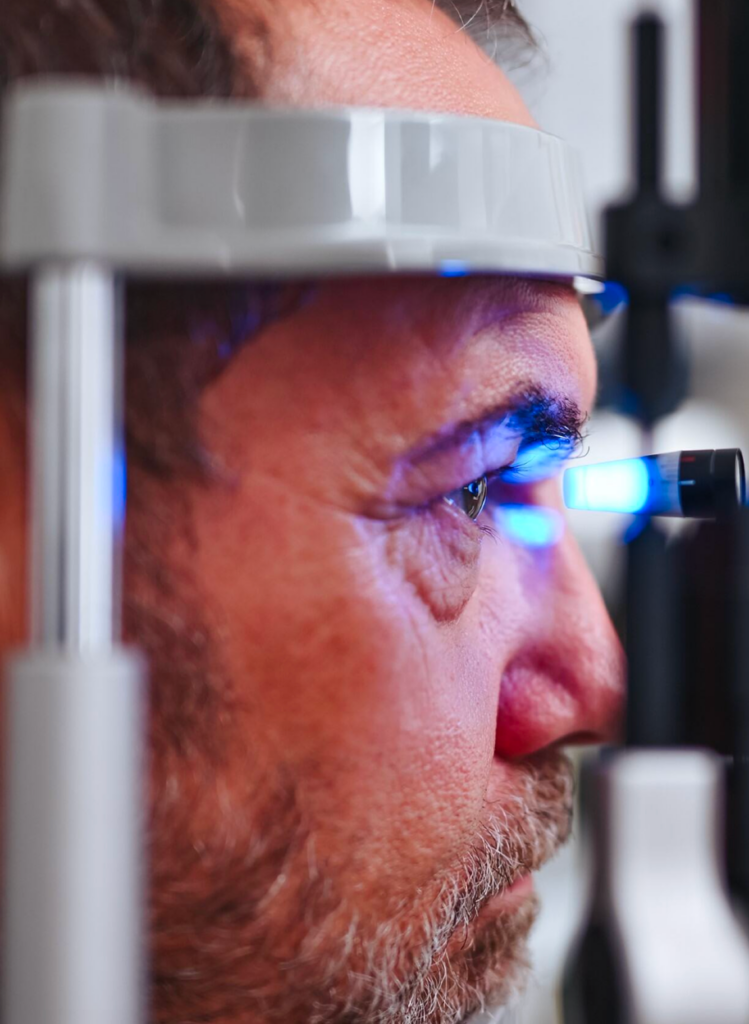
Many people do not notice early changes. Optometrists use several tests to detect ARM, including:

Ophthalmoscopy

to examine the macula

Pupil dilation

for a clearer view of the retina

Amsler grid testing

to check for distortion or missing areas

Optical coherence tomography (OCT)

to examine the layers beneath the surface of the retina

image6

Early detection is essential for timely management.

ARM FAQs

Age is the biggest risk factor. Over time, waste material that is normally cleared from the retina can build up, forming deposits that distort the macula.

In around 10–15% of cases, fragile new blood vessels grow beneath the macula and leak, causing scarring. This is known as wet ARM (or wet macular degeneration).

There are also inherited forms of macular degeneration that are not age-related.

ARM becomes more common with age:

  • Around 4% of people over 40
  • 9% of people over 50
  • 23% of people over 65
  • 31% of people over 80

It is more common in women and is a leading cause of significant vision impairment in older adults.

Damage to the retina cannot be reversed, but some treatments can help slow progression or manage the wet form of the disease.

Early diagnosis is vital. You should:

  • Have regular eye examinations, especially if you are over 50
  • Seek prompt assessment if you notice changes in your central vision
  • Tell your optometrist if you have a family history of macular problems
  • Regular monitoring gives the best chance of detecting ARM early and preserving vision for as long as possible.

Although ARM cannot be cured, many people benefit from low-vision support, including:

  • High-powered reading glasses
  • Hand-held or stand magnifiers
  • Electronic magnifiers (CCTV)
  • Large-print materials
  • Specialised lighting

Because ARM affects the area responsible for fine detail, people may notice:

  • Difficulty reading
  • Trouble recognising faces
  • Reduced clarity when driving
  • Distortion or missing areas in central vision